विञापनम् । (Advertisement)
विनयेन ञापनम अथवा विशेषेण ञापनम । ओधुनिक विञापने विनयस्य आवश्यकता नास्ति – अत्र किमपि वस्तु विशेषः कथं शलाघ्यः इति जनानां ज्ञापनं – निवेदनं एव उद्धेशो भवति । तस्मात् तस्य प्रदर्शसनमपि अत्यन्त आकर्षक तथा नूतनो दृश्यते । मया ताद्दश वित्रापनं दूरदर्शन द्वारा दृष्टम् । कतिपय गावः कुक्कुट इव छुक छुक शब्दं कुर्वन् मनुष्यं आकर्षन्ति । यदा सः तान् प्रति आयातः तं वदन्ति – इमानि कुक्कुटशावकानि विक्रीणनार्थं पालयसे – धनार्जनमपि करोषि – मुञ्च अस्मान् – किमर्थं वधसे अस्माकमपि – इति ।।
Advertisements seems to be becoming more and more original and creative. To make their products successful, manufacturers find this as the best way. One such advertisement caught my eyes. a group of cows tell the owner, imitating the chuk chuk voice of the little chicken, you have got so much chicken to sell and you get a good profit also. Then why slaughter us – leave us. We don’t know what the intention of the advertiser was, may be chicken business more profitable- or beef becomes costly and difficult to maintain – but the show made me think. Vegetarianism is advised for better health and is said to be attracting more and more people to become vegetarian over the years. Not that chicken is vegetable – but beef is something that man can avoid. To make the cow itself advise the more knowledgeable man is unique if it is meant for the purpose of propagating vegetarianism.
स्वदेशे विद्या इति लिखितुं प्रवृतोऽहं ॥ तत्र कारणं एका युवति या गृहमागता ॥ तस्या: स्वगृहं कतिचित पूर्वी प्रदेशे यत्र सा स्व मातृ भाषायां एन्जिनीरिन्ग उत्तीर्णा सकुशलं वसति स्म॥ अन्य मित्र जना: अत्यधिकं धनार्जन विषये विदेशं गता: इति लोभ वशात अत्र आगता॥ अत्र तस्या: भाषा ज्ञानं – अत्रस्थ आन्गिल भाषा परिचयम विना किञ्चिदपि कर्तुं अशक्ता जाता ॥ तत: जीवनार्थं गृह सहायक सेवा अथवा विद्ध्यार्थिन: शिक्षा – इत्यादि न्युनतम सामान्य प्रवृतिरीति संजातं ॥
अत्र तां दृष्ट्वा मम मनसि – विदध्या सर्वत्र धनं इत्यादि वचना: – व्यर्थम किं इति प्रश्नं उदित: ॥ वर्षानन्तरं वयं अमेरिका देशे पुनरायाता: तनयं तां प्रति अपृच्छत ॥ स: अवदत् – अम्मा॥ सा तु आन्गिल भाषायां शिक्षां प्राप्तवा अधुना कम्पनी उध्योघे सकुसलं वसति इति॥ विध्या धनमेव यत्र उद्योगं अपि स्यात्-उद्धरेदात्मना आत्मानं इति भगवत: वाक्यमेव प्रमाणं इति विश्वासो मयि आगत: ॥
We had a visitor. A lady quite good looking and educated greeted us. Must be in her early thirties. She had heard from somebody that my daughter in law was looking for a Nanni for her child.
On further inquiries what we heard was astonishing. She is a graduate engr. working in some far away country. She comes from that area. She came to America in search of a similar job. But she does not know English. That ignorance of the language has made her come for these petty jobs till she manages and masters the language and make herself eligible in the market.
We felt sorry for her. hesitated to appoint her or say no to her – as she said it will give her some weaning time to grasp the language and apply elsewhere for better job. she has a daughter and family to support.
I remembered the saying in Sanskrit that vidya is dhanam in videshe – When you go to other countries your education will help you. but nobody talked about the medium of education. whether it is in one’s own mother tongue or the so called universal language. We have seen people of other eastern origin without much knowledge of this langauge and they are also carrying on.
Next year when we came again I asked my son – what happened to that Bulgarian lady? He said – Oh- she went for a course in English and now she is well settled with a good job. So, it is not vidya only dhanam in vidhese – one’s own perseverance and readiness to adapt to the new region fully.
1) Cottage cheese or Tofu: cut the cheese or tofu into small squares. boil in sufficient water till it becomes tender. 5 to 7 minutes. Drain and keep aside. Take two large tomatoes and cook for 3 minutes in the micro wave. strain and remove the skin and the seeds. In a kadai heat 4 spoon full of oil, put one sp.Dhania powder, turmeric, and chilli powder. add the tomatoe puree. add salt and jeera.
add the drained cheese (tofu) squares. take half a spoon full of Basin (kadalai mavu) mix with a little water and add. put garam masala on the boiling gravy and add green Dhania lieaves.
2) Cook spinach with onion and tomatoe with salt. smash. Heat oil in a kadai add Dhania powder, chilli powder and jeera. add to the spinach.cut the cottage cheese into small squares and boil in sufficient water. till the chesse is tender. drain and add.
3) kattharikkai bartha – take a big kaththarikkai smear oil on all sides and heat in the micro wave for 10 minutes. let it cool. In a kadai take 4 to 5 spoons of oil and heat. add onions, one green chilli, stir till the onions are red, then add chilli powder, turmeric, dhania powder, and jeera. Then add two small tomatoes cut into small pieces. or micro wave it and smash.
Peel the kaththarikkai, and smash. add to the gravy, mix half a spoon of kadalai mavu to thicken the gravy. add garam masala, and green dhania leaves.
4) மிளகாய் பொடி (இட்லி, தோசை)
வெறும் வாணலியில் வெள்ளை எள்: 50 gm. சிவக்க வறுத்து எடுத்து வைக்கவும்
2 cup உளுத்தம் பருப்பு )
1 cup கடலை பருப்பு ) தனித் தனியாக சிவக்க வறுக்கவும்.
பெருங்காயம் ஒரு சின்ன கட்டி, இரண்டு ஸ்பூன் எண்ணெயில் வருத்து எடுத்துக் கொண்டு, அதே எண்ணெயில் 100gm மிளகாய் வற்றல் லேசாக வாசனை வர பிரட்டி எடுத்துக் கொள்ளவும்.
50gm.தேங்காய் துருவல் ஒரு கப் சிவக்க வறுக்கவும்.
ஒரு சின்ன கட்டி புளியை சுத்தமாக்கி, கொட்டை இல்லாமல், அத்துடன் மி.வ,. உப்பு சேர்த்து அரைக்கவும்.( மி.வ. ,உப்பு சேர்த்தால் தான் புளி அரைபடும்)
பருப்புகளை சேர்த்து அரைத்தபின், பெருங்காயம் சேர்த்து ஒரு ஓட்டு ஓட்டியபின் தேங்காய் பொடி சேர்த்து ஒரு ஓட்டு , பின் கடைசியாக எள், வெல்லம் சேர்த்து அரைக்கவும். ஒரே தடவையாக எல்லாவற்றையும் அரைத்துக்
கொள்ளவும். கலந்து வைக்கவும்.
milakai powder for idli and dosa
white til – roast in a vanali without oil till it is brown – keep aside
urad dal 2 cups – one cup of chene ki dal – roast seperately without oil till red and smells good
take one spoon oil and roast perungayam – remove and in the same oil roast red chillies slightly – remove the chillies and roast some grated (50 gm) cocoanut till brown.
take some tamarind (small lemon size) and clean – mix these three tamarind, red chillies and salt and grind. then add the dals grind – then perungayam, coconut and last the white til with some jaggery. (vellam) at one stretch all the ingredients will get ground and mixed.
5) Cauliflower
Clean and Cut cauliflower into big not too small pieces. take one potatoe for a big flower. and one onion. cut them into length wise – take oil in a kadai and heat put all three together add some amchur (less than half a spoon) turmeric, chilli powder, dhania powder and salt to taste. cover with a tight lid. after two three minutes reduce the heat and sprinkle some oil – do not stir now. let the heat be low. the potatoe will stick to the bottom. remove from fire. let it cool. after ten minutes again cook in the normal fire till it is- tender. now add garam masala and hara dhania – these two are must.
आधुनिकानां स्वास्थ्य सम्बन्धी विषया: अत्यन्त रुचिकरा: भवन्ति । तद्विषयॆ कतिपय उपदॆशा:, क्रियाविधा: कॆवलं आकर्षण विषया: द्दृश्यन्तॆ । यॊगासनादि स्वास्थ्य वर्धकमिति कश्चित्, प्रतिदिनं कतिपय अवकाश तीव्र गति धावनं श्रॆष्ठमिति कश्चित्, अपक्व शाकादि सॆवनमिति कश्चित् इति अनॆका: । तत्र नैसर्गमिति ऎक:। कृत्रिम कृषि द्वारा उत्पन्न शाकादि, तण्डुला: च मनुष्य प्रयत्नॆ सृष्ठा: बहुधा प्रचार प्रसाराधिभि: प्राबल्यं गता: । नैसर्गिक अथवा भगवद् सृष्टायां आहारा: इति बहुजन उपभुक्ता: च आयात: तॆ एव अध्य हानिकारका: दॊषयुक्ता: दर्शनॆ च असमा: इति तॆषां अवगुणा : कल्पयिता: । किन्तु बहुजना: बहुकाल पर्यन्तं असत्यॆ विश्वासिता: न भवन्ति । तद्विरॊध घॊषणा: अत्र तत्र श्रूयन्ते । बीजार्थं अनुपयुक्ता: कॆवलं आकृतिमात्रमिति तद्विरोधिन: कथयन्तॆ । नैसर्गिक गॊक्षीरं, नैसर्गिक खाध्य वस्तूनि, एव आरॊग्यवर्धकमिति तॆषां वाद: । कृत्रिम खाद्ध्य वस्तूनि पौण्डृक वासुदॆव वत् – इति ।
श्रीमद्भागवत कथायां ऎकॊ ’पौण्डृक:’ इति अपर: कृष्णमिव रूप लावण्य युक्त: सन् मित्र बन्धु जनै: श्लाघित: गर्वित: चासीत् । आकृति मात्रमेव ।
तदनन्तरं स: श्रीकृष्णमिव पीताम्बरादि धारयन्, सर्वालङ्कार भूषित: चासन् । भगवत: कल्याण गुणा: अथवा बुद्धि पौरुषादि तस्मिन् नासन् । सृष्ठि, स्थित्यादि अश्रुतमिव । बहुजन श्लाध्यमपि मदिरा इव बुद्धिम् मोहयत्यॆव ।
स: श्री कृष्णं प्रति दूतं प्रॆषितवान् । अहमॆव वासुदॆव: त्वं ममानुक्रमण कार्यॆ प्रवृत्त: अत: त्यज एष अलङ्करणादि विषयानिति ।
पश्चात् श्रीकृष्णं मॊहावशात् दूषितुं च उद्ध्यत: भगवत: श्रीकृष्ण हस्तॆ दण्डित: आसीत् इति भागवत कथा ।
अत्र बहु जन प्रॊत्साह वशात् प्राबल्यं गत: चिर कालं न स्थास्यती इति अवगम्यतॆ।
This is a story from Bhagavatham.
There was a man by name Poundraka Vasudevan in Vrindavana. He successfully controlled the Yamuna once. His followers praised him saying he was exactly as Sri Krishna of Mathura and it went to his head. Physically he was exactly as Sri Krishna was. He dressed himself in pithambara the yellow dress of Sri Krishna and wore the ornaments like he did. He imitated every action of the original Krishna. Once he sent a messenger to Sri Krishna saying that he was the original Vaasudeva whereas Krishna was acting on his name and taking credit of the good deeds. The messenger read the message ‘I am the incarnation as Vaasudeva. You have the body and features like my own. So people are misled. YOU should come and surrender to me’ People who heard this laughed. The messenger was sent back. After he left, accompanied by the Yadhava army Sri Krishna went to see this poundaraka Vaasudeva. He was exactly as Krishna himself. The only difference being no real powers as Krishna had.. He slew him with the Sudharsana chakra.
I have my own doubts. This Poundraka was not a Rakshasa or Kamsa’s body guard – who were determined to kill Srikrishna – He only imitated as he had the features of Krishna. Having come in the yadhava clan it is quite natural to have the same features. Had he (Shri Krishna) not eliminated this replica of his own body and features what would have happened? Let us think ..
Poundraka’s sons would have been like him and another lineage would have developed, confusing the citizens who the real king is.
Or, just like the BT tomatoes and apples that attracted the consumers he would have been accepted for the very form, nothing else.
We were happy when we first saw the large round tomatoes, beautiful red in color that came from Ooty. We were relieved it had longer shelf life, no worms or black spots. We used it heartily, in salads. After the initial enthusiasm died, we found it did not taste like the desi takkalikai. Desi takkali was better for juice and ita aroma was sweet. But, by the time wisdom descended the havoc has been caused – there was no desi thakkali in the market.
I came to the conclution it is good that Sri Krishna avoided this issue by slaying the duplicate immediately.
आधुनिकानां स्वास्थ्य सम्बन्धी विषया: अत्यन्त रुचिकरा: भवन्ति । तद्विषयॆ कतिपय उपदॆशा:, क्रियाविधा: कॆवलं आकर्षण विषया: द्दृश्यन्तॆ । यॊगासनादि स्वास्थ्य वर्धकमिति कश्चित्, प्रतिदिनं कतिपय अवकाश तीव्र गति धावनं श्रॆष्ठमिति कश्चित्, अपक्व शाकादि सॆवनमिति कश्चित् इति अनॆका: । तत्र नैसर्गमिति ऎक:। कृत्रिम कृषि द्वारा उत्पन्न शाकादि, तण्डुला: च मनुष्य प्रयत्नॆ सृष्ठा: बहुधा प्रचार प्रसाराधिभि: प्राबल्यं गता: । नैसर्गिक अथवा भगवद् सृष्टायां आहारा: इति बहुजन उपभुक्ता: च आयात: तॆ एव अध्य हानिकारका: दॊषयुक्ता: दर्शनॆ च असमा: इति तॆषां अवगुणा : कल्पयिता: । किन्तु बहुजना: बहुकाल पर्यन्तं असत्यॆ विश्वासिता: न भवन्ति । तद्विरॊध घॊषणा: अत्र तत्र श्रूयन्ते । बीजार्थं अनुपयुक्ता: कॆवलं आकृतिमात्रमिति तद्विरोधिन: कथयन्तॆ । नैसर्गिक गॊक्षीरं, नैसर्गिक खाध्य वस्तूनि, एव आरॊग्यवर्धकमिति तॆषां वाद: । कृत्रिम खाद्ध्य वस्तूनि पौण्डृक वासुदॆव वत् – इति ।
श्रीमद्भागवत कथायां ऎकॊ ’पौण्डृक:’ इति अपर: कृष्णमिव रूप लावण्य युक्त: सन् मित्र बन्धु जनै: श्लाघित: गर्वित: चासीत् । आकृति मात्रमेव ।
तदनन्तरं स: श्रीकृष्णमिव पीताम्बरादि धारयन्, सर्वालङ्कार भूषित: चासन् । भगवत: कल्याण गुणा: अथवा बुद्धि पौरुषादि तस्मिन् नासन् । सृष्ठि, स्थित्यादि अश्रुतमिव । बहुजन श्लाध्यमपि मदिरा इव बुद्धिम् मोहयत्यॆव ।
स: श्री कृष्णं प्रति दूतं प्रॆषितवान् । अहमॆव वासुदॆव: त्वं ममानुक्रमण कार्यॆ प्रवृत्त: अत: त्यज एष अलङ्करणादि विषयानिति ।
पश्चात् श्रीकृष्णं मॊहावशात् दूषितुं च उद्ध्यत: भगवत: श्रीकृष्ण हस्तॆ दण्डित: आसीत् इति भागवत कथा ।
अत्र बहु जन प्रॊत्साह वशात् प्राबल्यं गत: चिर कालं न स्थास्यती इति अवगम्यतॆ।
This is a story from Bhagavatham.
There was man by name Poundraka Vasudevan in Vrindavana. He successfully controlled the Yamuna once. His followers praised him saying he was exactly as Sri Krishna of Mathura and it went to his head. Physically he was exactly as Sri Krishna was. He dressed himself in pithambara the yellow dress of Sri Krishna and wore the ornaments like he did. He imitated every action of the original Krishna. Once he sent a messenger to Sri Krishna saying that he was the original Vaasudeva whereas Krishna was acting on his name and taking credit of the good deeds. The messenger read the message ‘I am the incarnation as Vaasudeva. You have the body and features like my own. So people are misled. YOU should come and surrender to me’ People who heard this laughed. The messenger was sent back. After he left, accompanied by the Yadhava army Sri Krishna went to see this poundaraka Vaasudeva. He was exactly as Krishna himself. The only difference being no real powers as Krishna had.. He slew him with the Sudharsana chakra.
I have my own doubts. This Poundraka was not a Rakshasa or Kamsa’s body guard – who were determined to kill Srikrishna – He only imitated as he had the features of Krishna. Having come in the yadhava clan it is quite natural to have the same features. Had he (Shri Krishna) not eliminated this replica of his own body and features what would have happened? Let us think ..
Poundraka’s sons would have been like him and another lineage would have developed, confusing the citizens who the real king is.
Or, just like the BT tomatoes and apples that attracted the consumers he would have been accepted for the very form, nothing else.
We were happy when we first saw the large round tomatoes, beautiful red in colour that came from Ooty. We were relieved it had longer shelf life, no worms or black spots. We used it heartily, in salads. After the initial enthusiazm died, we found it did not taste like the desi takkalikai. Desi takkali was better for juice and ita aroma was sweet. But, by the time wisdom descended the havoc has been caused – there was no desi thakkali in the market.
शुक्लाम्बरधरं विष्णुं शशिवर्णं चतुर्भुजम् ।
प्रसन्न वदनं ध्यायॆद् सर्व विघ्नोपशान्तयॆ ॥
नित्य पारायण श्लॊकमॆतत् सर्वॆ वयं जानीम:। प्राय: जना: सुन्दरं, वाचालकं च व्यक्तिम् आश्चर्यॆन पश्यन्ति। तस्य साकं भाषितुम्, इच्छन्ति। मैत्री कर्तुं च उद्ध्युक्ता: भवन्ति । शरीर सुंन्दरता ईश्वर दत्तं कालान्तरॆ नश्वरं च इति दृष्ठमॆव । किन्तु व्यक्ति प्रसन्न: कदा भवति ?। यदा स: कृत कृत्य: कुशल: तर्हि तस्य मनसि आह्लाद: विश्वं प्रति पूर्ण विश्वासम् च मुखॆ प्रकटी भवति । श्रीमद्वाल्मीकि रामायण काव्यारम्भॆ वाल्मीकि महर्षि: स्नानं कर्तुम् सरयू नदी तटॆ गत: स्व शिष्यम् वदति ” पश्य नदी जल्ं सन्मनुष्य मनॊ यथा” इति ।यदा मनुष्य मन: च्वच्छ् जलमिव शुद्दॊ अचलं च तिष्ठति तदा स: सन्मनुष्य इति कथितुम् यॊग्य: । साधारणत: शुद्ध सलिलम् सन्मनुष्यस्य उदाहरणं वदन्ति । तस्य वदनं प्रसन्न: । पसन्न वदनं पश्यन्त: स्वयमपि प्रसन्नॊ भवन्ति । दर्शन मात्रॆण तस्य मनसि कुतूहलम् वर्धति । मनसि कल्मषभरित:, छ्लॊ वा, मुखॆ पसन्नतां आनॆतुम् न शक्त: अथवा तस्य मुखमॆव अन्तस्थं कुचरित्रं दर्पणमिव दर्शयति । पुष्पॆ, पक्शिगणॆ, शिशवॆ च पसन्नता स्वाभाविकमॆव । चित्रकारा: शिल्प निपुणा: च कला सृष्ठ्यां गुणं प्रदर्शयितुम् निपुणा: भवन्ति । तॆषामेतत् जन्मसिद्ध अधिकार: ईश्वर दत्त वरॊ वा । गज दर्शनम्, समुद्रावलॊकनम्, आकाशॆ चन्द्र दर्शनम ऎतानि मनसि प्रसन्नतां आनयन्ति. “वनॆ वा हर्म्यॆ वा सम कर निपातॊ हिमकर: ” इति चन्द्रं प्रति श्रीमद् भगवद्पादकृत दॆव्या: स्तॊत्रं सौन्दर्यलहरी प्रसिद्धमॆव ।
कथं अहं प्रसन्नॊ भवॆयम् ? आत्मानं सुन्दरम् प्रदर्शयितुम् साधना: बहुधा श्रूयन्तॆ । आत्मानं बलिष्ठम् दर्शयितुम् च यॊगादि करणा :, व्यायामादि च सन्ति। स्व पुत्र दारादि प्रिय व्यवहारॆण तोषितुम् शक्नुम:। अन्यजनं प्रसन्नं कर्तुं वयं अशक्ता: एव। सम्गीतग्ञा: सफला: । सुमधुर गानं श्रुण्वन्तं संतॊषयति । नाटकादि दृश्य कळा: विनॊद मूला: अल्प कालं रसिकजन आह्लादकरा: स्यु: ।
सर्वदा प्रसन्न: श्लोकॆ कथित भगवान् विघ्नॆश्वर: एक एव ।
अत: य: सदा प्रसन्न वदन: शशिवर्ण:, शुक्लाम्बर: च तमेव शरणं गच्छाम: ।
६) (Based on the lectures of Shri Chandrasekarendra Saraswathi Swamiji of Kanchi Mutt, known as Maha Periyava – written by R.Ganapathy, Deyvatthhin kural” The voice of Maha periava)
Suklaambaradharm vishnum sasivarnam chathurbujam |
Prasanna vadanam dyayeth sarva vignopa santhaye ||
We chant this sloka daily – at the beginning of every ritual or puja praying that whatever we have started should be completed without hindrance. Generally people are attracted by beauty, and admire a person who talks well or jovial who has the gift of making the listener happy. They want to be friends with that person. We know beauty is natural. But when does a man become ‘prasanna:’ – that is pleasing personality. There is no exact translation in English for this Sanskrit word ‘prasanna’ – perhaps happy by himself and be pleasing to others. We may say success makes the man happy. The poet Valimiki the great poet describes how he got the inspiration to write the Mahakavya. Once, along with students went to the river Sarayu (in Ayodhya). When he saw the still water a pleasant feeling filled his mind. He was overwhelmed. He told them “See, this water is still and beautiful like the minds of the good people” Ordinarily the good people are compared to the pure water. This is in the second chapter in Srimadh Valmiki Ramayana – A happy and contented person makes others happy by his charm just like a flower, or the sparrows, or the child. Seeing which people feel happy and excited. When the mind is not pure, and having the traits of cunning or cheating, the charm is lost in the face. Painters and sculpters have this gift, it is said they bring out the charm in their art. Music and Drama make the audience happy. When we see an elephant, see the sea on a full moon night, or the moon on a tranquil night, what we feel is the prasannatha – the feeling of the fullness in the mind.
It is difficult for us, the mortal beings to be prasanna always. But the Lord Ganesha is always Prasanna – The meaning of the sloka goes like this – We surrender ourselves to this Vigneswara, who is prasanna vadana: clad in pure white dress, like the full moon whose very sight fills our mind with joy and happiness.
गत शनिवारॆ मम भारत दॆश चरित्रं प्रति ऎक: फॊटो सहित जाल -पत्रम् आयात: । तस्मिन् लिखितमासीत् यत् – प्रारम्भ कालॆ विदॆश शासका: भारत दॆशस्य उन्नतिं घटयितुं उद्धुक्ता: आसन् । तत्र किं कर्तव्यमिति अन्वॆषणाय ऎकॊ महानुभाव: प्रस्थित:- तस्य सर्वप्रथम लक्ष्यं भारतीय परंपरागत शिक्षा प्रणालीं आमूलं नाशयितव्य: इति । वॆ सफला: आसन् इति वयं अत्त्रत्य भारतीय शिक्षाया: दशां दृष्ट्वा कथयिष्याम: । किन्तु भगवत: कालचक्रं चलत्यॆव –
यत् स्वदॆश संस्कृतिं नाशयितुं प्रवृत्ता: – तस्या: भाषा ग्ञानं अल्पमिति घॊषित्वा लॊकान् लॊभॆन, निर्बन्धॆन वा अन्य भाषा, अन्य संस्कृति इति प्रजानां
बद्धिं कलुषीकृत्य पाश्चात्य संस्कृतिरॆव विशिष्टा इति मन्यमाना: स्व कुलाचारं त्यक्त्वा आंग्लॆय भाषायां शिक्शा, तस्यामॆव पाण्डित्यं इति आत्मानं परिवर्तिता: तॆ अध्यापि ईश्वरानुग्रहॆण विदॆशॆ कार्य निमित्तमागता: स्व धर्मं, ईस्वरस्मरणं इति भारतीया: ऎव वर्तन्ते । तत्रापि संस्कृत भाषायां अत्यन्त उत्सुका: इति दृष्ट्वा वयं आश्वासिता: तुष्टा: च: ।
किमर्थं ऎतद् पूर्वपीठिका इति पृच्छसि चॆत्, वदामि – अस्मद् मित्रभूता ऎका अमेरिका दॆशवासी – स्व उद्ध्यॊग निमित्तं भारतं गमिष्यति । सा अपृच्छ्त् – भारत दॆशॆ प्रसिद्ध भाषा संस्कृतम् इति श्रुतं – किं अहमपि संस्कृत भाषायां व्यवहर्तुं शिक्षणीयमिति ।
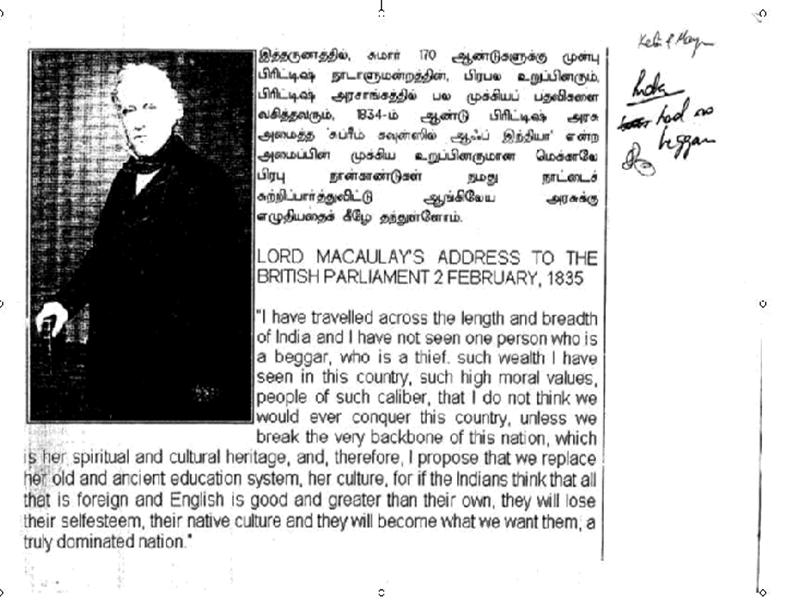
Last Saturday we got a message by email with photos of how in the early days, when the British dominated the country, common people never bothered, they were as usual pursuing their rituals and education. (see image) Lord Mccaulay found that education system of our ancestors was the best. It made them great in mind and spirit though simple in their life. They led a contented life – no beggars or thieves. So, Lord Mccaulay thought how could the indian people be humbled. The best way to subdue them was to destroy their education. And they did succeed – We can see that from todays’ education system, now-a-days it is all the more visible. People were made to think high of English and the culture of its land of origin. They were made to believe that only the study of English could bring prosperity. Indians mastered the English language. But by God’s grace once they got well educated and went out of India for their career and settled down in foreign lands. Still, they happened to be Bharatheeyas in mind. They hold classes for learning the good old Sanskrit language, build temples and conduct poojas as in their motherland, perhaps with more devotion.
You may ask why this preamble – I am coming to the point – One of our daughter in law’s friends, an american lady is going to Chennai – she got the official posting there as manager of their company. She asked us about life in India. She said that she had heard very highly of the Sanskrit language and she knew that classes are held by Indians in many places in America. She asked ” should I learn and become proficient in this language to move with people in India?”
गुरुकुलं
अद्ध्य हिन्दि पत्रिकायां मम दृष्टि पदमायात विषय: – आधुनिक माता पितर: स्व सन्तान विद्ध्याभ्यासं ’बोर्डिंग स्कूल’ अथवा गुरुकुल शिक्षां अधिक श्रॆयस्करं मन्यन्तॆ – इति. सत्यमॆव. विद्ध्यार्थिनां सहपाठीनां मध्यॆ अन्यॊन्य भ्रातृ भावं वर्धयॆत् तथा उद्धरॆदात्मनात्मानं इति गीताचार्यस्य वचनानुसारं स्व पुस्तक वस्त्र इतर वस्तून्यपि स्वयं परिपालितुमपि यॊग्य: भवॆदिति, पाठ्य विषयॆ जाग्रत:, उत्सुक: अग्रगण्य: च आगमिष्यति – इति तॆषां आशा । न सन्दॆह:| नाहं अत्र विषयॆ समर्थनं अथवा निषॆधार्थं किञ्चित् वक्तुं प्रव्रुत्ता । मम स्मरणं कतिपय वर्षाणां पूर्वं ऎको बालक: प्रह्लादस्य चरित्र श्रवनानन्तरं अत्यन्त चिन्ताग्रस्त: आसीत् – तत्र गतं । अहं तस्य चित्त्र पुस्तकात् प्रह्लादचरित्रं पाठयति स्म । स: हिरण्य कशिपु राजानं, पितास्थानॆ ऎव द्दष्ट्वा, तस्य पक्षॆ आसीत् । कथा प्रसिद्धमॆव – पिता पुत्त्रं वात्सल्यॆन अङ्कॆ कृत्वा पुत्र ! अद्ध्य शिक्षितस्य श्रॆष्टं किं वदॆति पृच्छति सति पुत्र प्रह्लाद: अवदत् – ध्यॆयं नारायणमिति । तत: क्रुद्धॊ राजा गुरुपुत्रं आदिशति किमिदं शिक्षितं ? मम पुत्रस्य नारायण स्मरणं कथमागत: यदा तस्य पितरादन्य: न भूत: न भविष्यति इति शिक्षणीयमासीत् -इत्यादि ।
तदा अयं बालक: मामपृच्छ्त् – आर्यॆ ! किमिति तद्पिता आचार्यं स्वगृहमानीय पुत्रं स्वमतानुसारं शिक्षयतीति ।
Translation:
Today’s Hindi news paper ‘Jagran’ carried a news item wherein it was written that parents are willing to send their wards to Boarding schools – modern day Gurukulam – where the children learn to be together and learn to be responsible besides being friendly and well behaved. There will be competition and they will try to come first and all that. It may work well for the working ladies who have no helping hand at home, an elderly grand mother or grand father – but here my intention is not to dwell with the merits and demerits of the system. I was reminded of a small boy to whom I was narrating the story of Prahladha and his father Hiranya kasipu, the legendary dialogue between the father and the son from a picture story book, he was absorbed in his thoughts. For him Hiranya kasipu was simply a father, so he took his side. The story goes like this – The father, took his beloved son on his lap and asked ‘son! what did you learn today – tell me what you liked the best. The son Prahladha said ‘Always praise the Almighty Narayana’ – Hiranya kasipu got angry and shouted at the Guruputhras who had broght the child to his father for their weekly meeting. What is it you have taught my son – how come he chants the name of Narayana, whereas he was to be taught of me – the great king, all powerful and all that ‘ The boy asked me innocently ‘Madam ! Why not that father arrange for home tuition – he could have brought the teacher home and educate his son according to his wishes.
संस्कृत भाषा साहित्यॆ आधुनिक लॆखका: इति विरला: ऎव सन्ति । इतिहास, पुराण, आद्ध्यात्मिक स्तॊत्राणि, उपनिषत्क्था इति कतिपय काव्यालङ्कार् भरित रचना: लॆखकं नव रचनायां वारयत्यॆव । अथवा, स्वयं स्व रचनां अल्पं अगण्यं वा मन्यमान: विरमति । तमिऴ भाषायां श्री रामायण काव्यारंभे महाकवि
कंबन वाल्मीकि महर्षॆ: रामायण काव्यस्य तमिऴ् भायाषां रचयितुं प्रवृत्त: कथयति ’महात्मा वाल्मीकि महर्षॆ: काव्यं नाम क्षीर सागर: । तत्र यदा ऎकॊ बिल्लुक: सागर स्थितं दुग्धं पिबति, तद्वत् अहमपि यत्किञ्चित् वक्तुमुद्ध्य्तॊऽस्मि – इति. कंब काव्यं लोके प्रसिद्ध्: । काव्यालङ्कार, नीति, धर्म, मानव चरित्र चित्रणादि विषयॆ तत्र भवान् अपर: वाल्मीकिरॆव । संस्कृत भाषा ग्ञानं साहित्य रसं आस्वासितुं, स्व्च्छ उच्चारणार्थं च सहायकं भवति । किन्तु रचनायां आधुनिकानां उत्साह्ं न दृश्य्तॆ ।
तदनन्तरमपि यत्किञ्चित् लिखितुं प्रथित: गृहीत कलम: सॊचति – मनसि कृत संकल्प: प्रारभति – तदा पूर्व पठित काव्य नाटक स्मरणं बाधयति। अहो ! अयं वृत्तान्त: पूर्व श्रुतमॆव – रामायण, महाभारत, भागवत, अन्य ग्रन्थायां कथितमॆव -इति विरमति । पुनरुक्ति दॊष: न स्यात् इति ।
अत: आधुनिक समाजानुकृतं लिखामि इति उद्ध्यतॊऽहं । न चापि काव्यं नवमित्यवद्यमिति उक्तमॆव । सामाजिक कथा प्रवहति स्म । तदा एक: अस्म्द् परिवार शुभ चिन्तक: महानुभाव: आगत: । मम कथां पठित्वा तूष्णीं आस्त । मया पृष्ठं – आर्य ! कथं संस्कृत भाषायां मम रचना इति ।
स: अवदत् ’संस्कृतं सुन्दरमॆव – कथा विषयं …’
अहं ’किमिति ?’
एष कथा नायक: गणिणि तन्त्रायां विशिष्ठ:
अस्त्यॆव – तत: किम् ?
मम पुत्रॊऽपि, विशिष्ठ विग्ञानी – अमॆरिका दॆशं गत:
ऒहॊ –
तव कथा नायक: तत्र अत्यर्थं संमानित:, स्ंतुष्ठ: च । ईदानीं पुन: भारत दॆशागमनॆ मतिं न करॊति । तव कथा नायकवत् ..
प्रति दिनं मातरं, पितरं च सादरं आह्व्यति, ..
श्रीमन् ! किमिद्ं ? न वा इदं भवत: अभिप्राय: यत् भवत:परिवार कथामॆव मया लिखितमिति ?
तदॆव, तदॆव्, श्रीमान् बन्धु महानुभाव: सहर्षं आमॊदयति स्म – मम पुत्र कथा ऎव – भवतु – संस्कृत भाषायां लिखितॊऽसि । तन्नूतनमॆव -चिरं जीव -इथि वदत: गत: ॥
Translation:
In the Sanskrit literature latest works by writers of the latest generation are very few. Almost nil.
Sahityam, i.e. literature in Sanskrit is an ocean. There are the Ramayana, Maha Bharatha, Bhagavatha stories, plus the sthothra – prayer songs written by very great people, written with style and beauty, one hesitates to venture to add anything new. No comparison. The great Tamil poet Kamban wrote the Valmiki Ramayanam in Tamil verses. He had followed the Valmiki Rishi for the legendary Sri Rama charitram. He says ‘ Valmiki maharishi’s work is the Ocean of milk. I am like the cat that sets its foot from the shore eagerly to taste the milk, – ‘ Kamban wrote the Kamba Ramayanam, it is no less in grandeur or style to Valmiki maharishi’s own Srimadh Ramayanam in Sanskrit. Kamban is praised as the second Valmiki by the devotees. He is quoted in every walk of life, Dharma in ordinary life to justice and even in politics.
Knowledge of Sanskrit helps to understand and enjoy great literature. Helps in reading the sthothras without mistake. But to write it is difficult. Even then if the writer starts, imagines a story, he feels that had already been told by some one. Retelling is a great mistake according to Sanskrit literature rules.
So, I started with a story of the modern society. It flowed uninterrupted – I was fairly satisfied with my work –
Then, one of our family friends, a nice person, and well wisher, came. I showed him my piece of work and asked ‘Mama.
how is it? I have written in Sanskrit.
He hesitated and said, “Nice, your Sanskrit style is good – but the text..”
I asked ‘Sir, what is it?’
He said – Your hero of this story is an engineer, expert in Computer Science
So, what?
My son is also an expert in Computer Science, is now in America.
Oho
Your hero is well settled there, well paid and is happy, does not think of coming back to India.
My son also. He calls us daily ..
I said ‘ Sir What is your implication – I have written the story based on your son’s achievements?
He said happily, yes, yes, that is it — it is the life story of my son – but don’t lose heart, you have written in Sanskrit –
That is new, my blessings – so saying he left.
लोको भिन्न रुचि: इति कथ्य्ते । कालस्यानुगुणम् साहित्य, संगीत, मनॊरञ्जन विषया: बहुविधा: वर्धिता: अगणिता: सन्ति । अत्र आधुनिक जनानां आकर्षणं क्रीडा क्षेत्रे अधिकं दृश्यते । तत्सम्बन्धित ञानार्जनं, तत्सम्बन्धित वार्तालापा: च प्रियकरं भवन्ति । बालॊ वा, युवा वा, वृद्धॊ वा अस्मिन्विषये ऎकैक ध्यानपरा: । अत्र समय व्य्यं, धन संचयं च कर्तुं उत्सुका: ऎव । कंदुकं मध्यॆ भवति – पादॆन हस्तॆन वा ताडयन्ति- तत्पश्चात् धावन्ति – नियमा: बहुधा सन्ति – रसिक जनानां तत्सर्वं अवगतम् । लक्षॊपलक्ष जना: जन समुद्र् इव ऎक्त्र स्थिता: सन् – स्वपक्ष प्रॊत्साहनार्थं घॊषयन्ति, वाद्ध्यानि वादयन्ति – स्वपक्ष विजयार्थं प्रार्थयन्तो अनिमीलित दृशा: च भवन्ति ।
इदं मया चलचित्रायां दृष्टम् । पक्षद्वयमपि समर्था:, समान शक्ति शीला:, कीर्तिमन्त: च आसन्। राम रावणयॊ: युद्धं राम रावणयॊरिव इति
वाल्मीकि महर्षिणा वर्णितम् । तद्वत् अन्तिम क्षण पर्यन्तं समान फला: आसन् । ऎकॊ द्वॊ वा क्षण मात्रावशिष्टे – विजेतारं निर्णयितुं अशक्ता: -परस्परं विवादं – आक्षेप समाधानानि – सर्वत्र कोलाहलो महानभूत् । दर्शका: उत्साहहीना:, विगताक्रॊष शब्दा: प्रस्थितुमुद्ध्य्ता: – तदा कन्दुक्ं हस्तॆ धृत ऎकॊ
क्रीडक: स्खलित: – प्राय: गत घण्ठाधिक अविच्छिन्न धावनादि क्रीडा प्रक्रियेन श्रान्त: – तस्य हस्तात् कन्दुकं पादॆ पतन् निर्गत: अन्य
पक्ष क्रीडकं प्रति चलन् – त्रुटि मात्रमॆव – विस्मित: , चकित: , विश्वसितुमपि अशक्त: – स्वप्नॊ वा भ्रमॊ वा – तत्रस्थ: प्राप्त क्षणार्ध अवकाशॆ
कंदुकं गृह्णन् सीमा पर्यन्तं धावन् उच्चैरघॊषयत् – जिता: स्म – इति ॥
Translation:
People have dfifferent tastes. Literature, Music and entertainment have changed. Sports has taken the centre stage. Sports news, aquiring knowledge about sports – talking about sports- these are the most pleasant things. Age does’nt come on the way – small boy or a middle aged, or an old man – all enjoy the same . They spend money, and time willingly. Mostly the viewers are up to date with the rules of the game and the players.
(This is the foot ball match played in the US. People here are crazy over the ball and the match. One should see to believe. Rules are complicated – for the first time viewer it makes no sense when the ball is carried on the armpit and the player running – others running all over the ground and finally make him fall – he gets the point when the ball is still in his hand and loses it when he lets it off. )
Lakhs and lakhs of people – ocean of human heads – what makes them together – they take sides and encourage the side that they support-play the instruments- pray for their victory and watch with open eyes.
This, I saw in the TV live relay. Both sides were competent, equally famous and both had the chance of winning – being the final match – the expectations were much more. Poet Valmiki maharishi described the war between Rama and the demon king Ravana as Rama Ravana yudhdham (the war) was the war between Rama and Ravana – It was the same here also. Both side played well and reached the last second. Only one or two seconds were left – could not decide the winner – The crowd stood scared even to breathe – there were
no more noise – most of them were almost ready to leave –
At that moment, the player who held the ball in hand lost his balance – may be due to the long run for more than one and a half hours – and the strain of the tournament – the ball fell on his foot and went forward towards the opposite side – the nearby player was stunned, could not believe himself -is it true – no dream or illusion – he took the ball in that half a second – ran towards the goal and announced loudly ‘we have won’
 Janakikrishnan's Blog